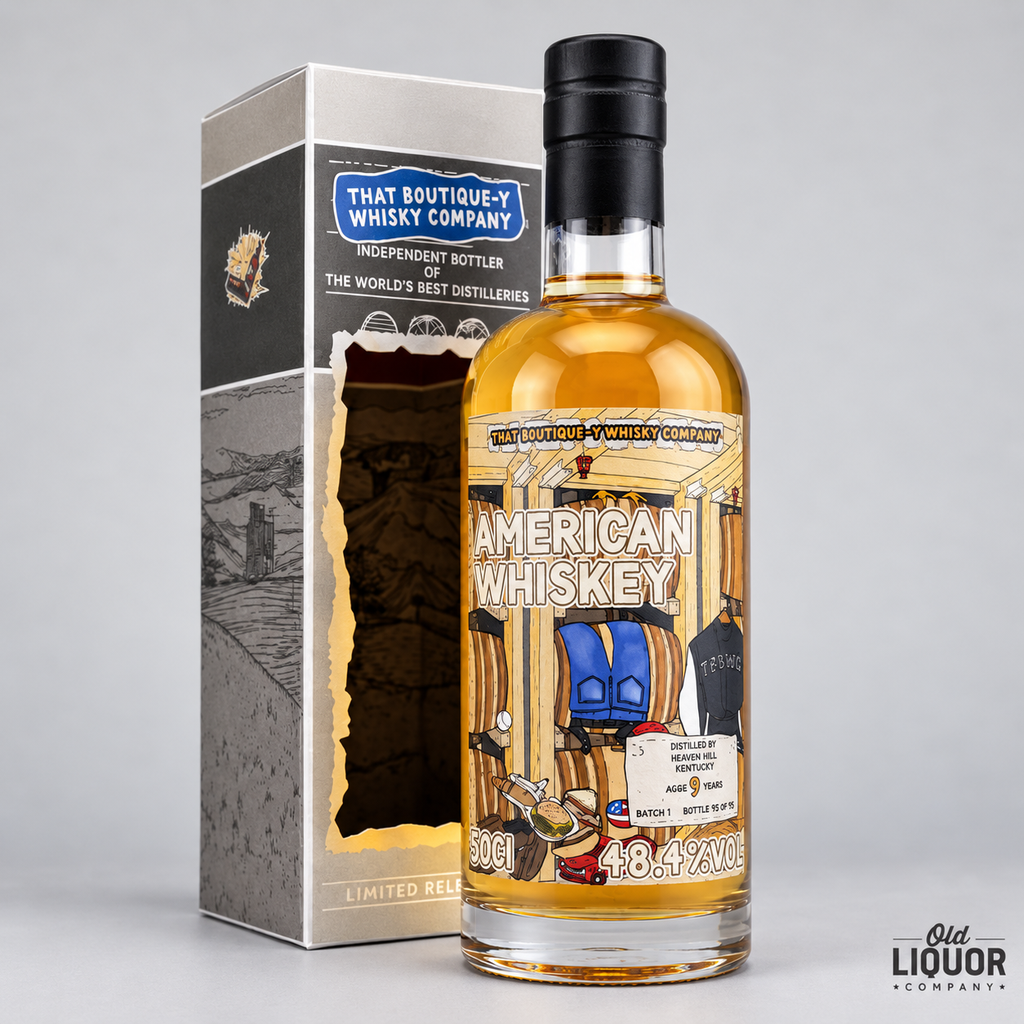
Heaven Hill is one of the most resilient and influential names in the history of American whiskey. Since its founding shortly after Prohibition, it has grown into the largest independent, family-owned and operated distillery in the United States.
The history of Heaven Hill is defined by four major eras:
1. A Bold Post-Prohibition Start (1935)
When National Prohibition was repealed in 1933, investors rushed to rebuild the spirits industry. In 1935, the Shapira family—five brothers who originally ran clothing stores—partnered with a group of investors to establish the Old Heavenhill Springs Distillery in Bardstown, Kentucky.
The name originally paid tribute to William Heavenhill, an early pioneer who had owned a farm on the property where the distillery was built. However, due to a clerical error when registering the business name, "Heavenhill" was accidentally split and recorded as Heaven Hill. Even though the Shapira brothers knew nothing about making whiskey at the time, they quickly bought out their investment partners and kept the company entirely family-owned.
2. The Legendary Beams at the Stills
While the Shapira family managed the business and finance operations, they left the whiskey-making to the absolute experts. They hired master distillers from Kentucky's most famous distilling bloodline: the Beamfamily.
From the very beginning in 1935 until well into the 21st century, members of the Beam family stood at the controls of Heaven Hill. This included icons like Harry Beam, Earl Beam, and the legendary father-and-son duo Parker and Craig Beam. They created the flavor foundation for massive brands like Evan Williams(introduced in 1957) and Elijah Craig (introduced in 1986), helping pioneer the premium "small batch" bourbon category when the domestic whiskey market was struggling.
3. The Devastating Fire of 1996
The darkest chapter in the company’s history occurred on November 7, 1996. A catastrophic fire, fueled by high winds, broke out and completely destroyed the historic production plant in Bardstown.
The fire spread rapidly through seven massive, wooden aging warehouses (rickhouses). Rivers of burning alcohol flowed down the hillsides, creating literal walls of fire. In total, over 90,000 barrels of aging whiskey were lost—representing about 2% of the world's entire bourbon supply at the time. Miraculously, no one was seriously injured, but Heaven Hill's distillation capacity was completely gone overnight.
4. Resurgence and the Bernheim Acquisition
Instead of closing their doors, the Shapira family showed incredible resilience. Competitors like Jim Beam and Brown-Forman stepped in to help by lending distillery space so Heaven Hill could keep filling bottles and maintain its shelf space.
In 1999, Heaven Hill secured a permanent solution by purchasing the state-of-the-art Bernheim Distillery in Louisville, Kentucky, from Diageo. From that point forward, all of their mashing and distilling took place in Louisville, while the barrels were trucked back to Bardstown to age in the surviving and newly built rickhouses.
Today, Heaven Hill produces a massive spirits portfolio (including Larceny, Henry McKenna, and Rittenhouse Rye). In recent years, they also returned to their roots by opening the brand-new Heaven Hill Springs Distilleryright back in Bardstown.