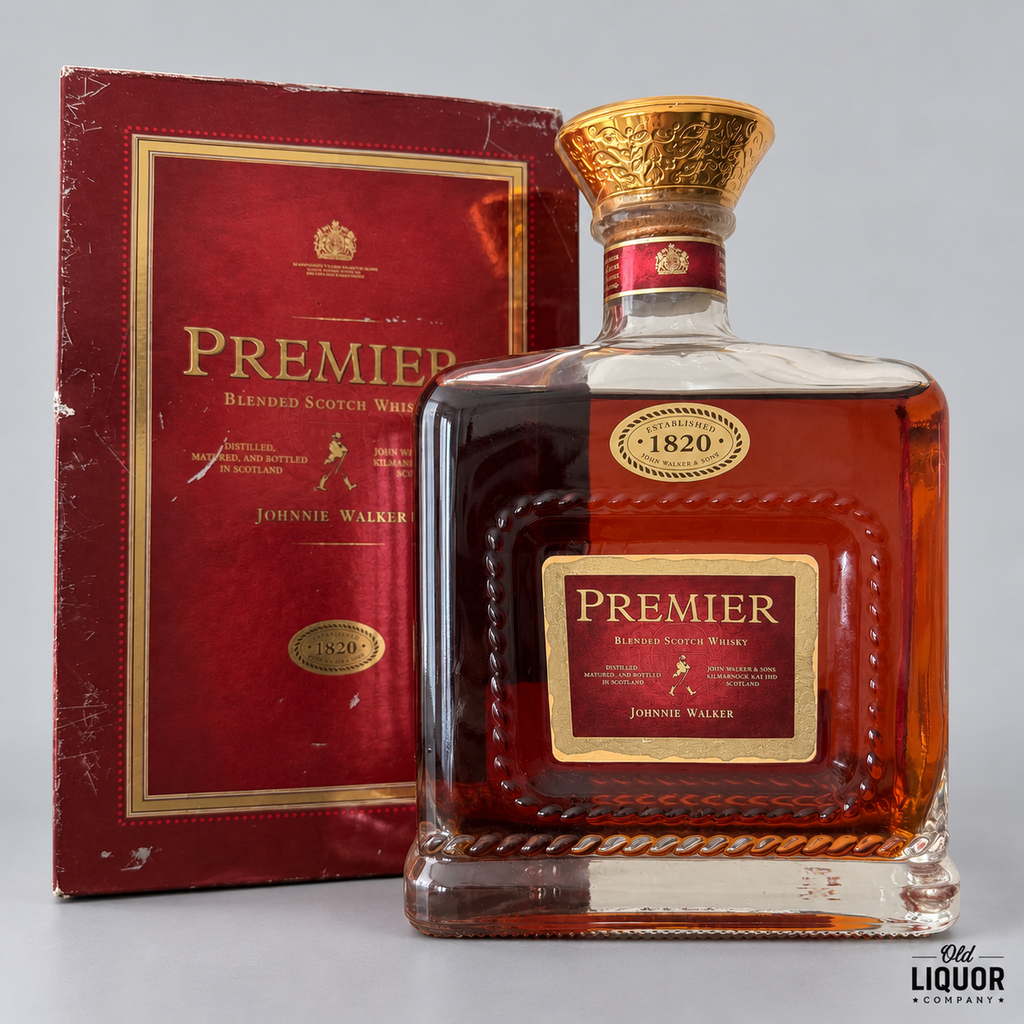
The Ultimate History of Johnnie Walker: From Grocery Shop to Global Icon
The fascinating history of Johnnie Walker began in 1820 in Kilmarnock, Scotland. Following the passing of his father, a young farm boy named John Walker sold his family estate. He used the capital to establish a small grocery, wine, and spirits shop.
During the 19th century, standard Scottish grocers stocked unpredictable single malts that varied wildly in taste from barrel to barrel. Utilizing skills he had perfected while custom-blending loose-leaf teas, John began combining different malt whiskies. This innovative blending technique allowed him to offer customers a reliable, remarkably smooth flavor profile with every single purchase.
                  THE EVOLUTION OF AN ICON

  [1820] ─── John Walker opens Kilmarnock grocery shop
  [1860] ─── Square bottle introduced to reduce shipping breakages
  [1867] ─── Alexander Walker launches "Old Highland Whisky"
  [1877] ─── Famous 24-degree slanted label is copyrighted
  [1908] ─── Tom Browne sketches the iconic "Striding Man"
  [1909] ─── Official rebranding into Red Label and Black Label
Crafting a Global Identity
When John passed away in 1857, he left a prosperous local business to his son, Alexander Walker. Alexander was a visionary businessman who realized that the newly built local railway network could connect Kilmarnock to merchant ships traveling across the globe.
To expand into international trade, Alexander introduced two revolutionary packaging elements that define the brand today:
- The Square Bottle (1860): This distinct shape meant more bottles could pack tightly into shipping crates, drastically reducing breakage during long maritime journeys.
- The Slanted Label (1877): Angled at precisely 24 degrees, this patented design allowed for larger, more legible text, making the bottle stand out on crowded global shelves.
In 1867, Alexander launched the company's very first commercial blend, "Old Highland Whisky," hiring ship captains as agents to distribute the spirit across every continent.
Birth of the Color Labels and the Striding Man
The brand truly transformed into a modern powerhouse under John’s grandsons, George and Alexander II. In 1909, they officially rebranded their core whiskies according to the colors consumers used in shops. Old Highland Whisky was renamed Johnnie Walker Red Label, and their extra-special 12-year-old expression became Johnnie Walker Black Label.
During a business lunch in 1908, the famous illustrator Tom Browne sketched a dapper, walking Victorian gentleman on the back of a menu card. This figure became the "Striding Man" logo, accompanied by the slogan, "Born 1820—Still Going Strong," symbolizing forward momentum and constant progress.
The Modern Era of Luxury Blends
Throughout the late 20th century, Johnnie Walker expanded its portfolio to cater to premium collectors:
- Johnnie Walker Green Label: A unique 15-year-old Blended Malt crafted exclusively from iconic Speyside, Highland, and Island single malts.
- Johnnie Walker Blue Label (1992): The ultimate luxury expression, created to mimic the rare, powerful character of early 19th-century whiskies.
Today, Johnnie Walker is owned by Diageo and stands as the world's best-selling Scotch whisky. From a tiny grocery store in Kilmarnock to a presence in over 180 countries, the brand continues to stride forward as a global testament to premium Scottish heritage and pioneering craftsmanship.