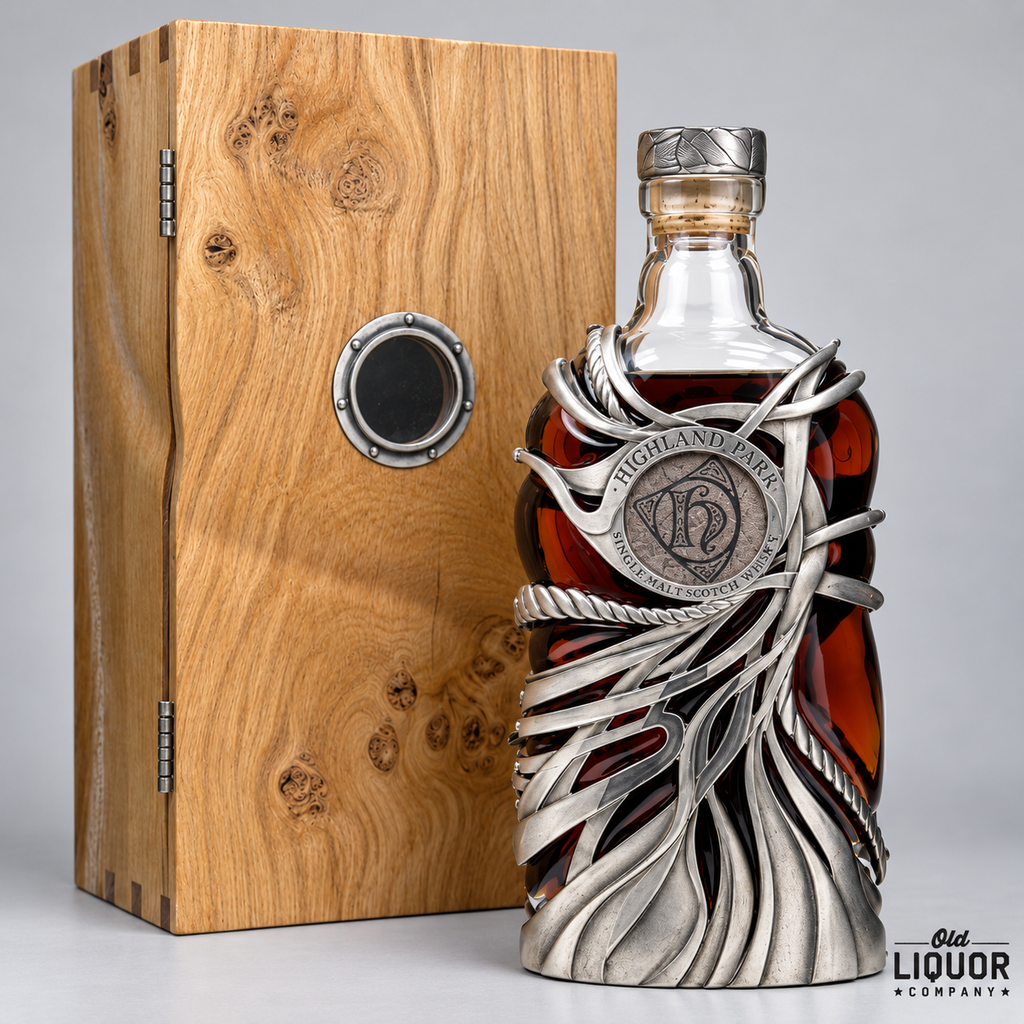
The history of the Highland Park distillery is one of the most colorful stories in the Scotch whisky industry. It begins with an audacious tale of illicit smuggling on the remote Orkney Islands. Despite its name, the distillery does not refer to the Scottish Highlands. The name actually comes from "High Park", the elevated area above the town of Kirkwall where the distillery was founded.
The Illicit Origins (1790s)
The story of Highland Park begins with Magnus "Mansie" Eunson. He was a memorable character who worked as a butcher and a church officer (beadle), but spent his nights operating as an illicit distiller and smuggler.
- Whisky Under the Pulpit: Eunson ran a clandestine still on the High Park grounds. He used his position at the local church as the perfect cover. He frequently hid his illegal stashes of whisky directly underneath the church pulpit to keep them away from excise tax collectors.
- The Smallpox Trick: Legend has it that when tax officers searched his home, Eunson quickly moved a cask of whisky to the church, draped a white cloth over it, and surrounded it with a coffin. When the officers entered, he and his congregation pretended to mourn a victim of smallpox. The terrified officers immediately fled. However, he was eventually caught in 1798.
Legal Foundation and Growth (1798–1890s)
Following Eunson’s run-ins with the law, the property was purchased by David Robertson. He officially established the legal Highland Park distillery in 1798.
- The Official License: Highland Park operated quietly in its early decades. In 1826, the distillery finally obtained an official legal distilling license under the management of Robert Borwick.
- The Grant Era: In 1895, James Grant (of the famous Glenlivet family) purchased the distillery. He doubled production capacity by expanding the site to four stills by 1898. This expansion helped secure Highland Park a fierce reputation for high-quality single malt whisky.
Corporate Transitions (1937–Present)
Highland Park managed to survive the turbulent early 20th century, though production was briefly stopped during wartime.
- Highland Distillers: The distillery was bought by James Grant & Sons in 1937, which later became part of Highland Distillers. For decades, most of the whisky produced here was used as a component for famous blended Scotch whiskies.
- The Single Malt Shift: In 1979, the company shifted its strategy to focus heavily on marketing Highland Park as a premium standalone Single Malt. This move skyrocketed its global popularity. A visitor center was opened on the island in 1986.
- The Edrington Group: In 1999, The Edrington Group acquired the distillery. They heavily lean into the island's Norse history, branding the whisky around "Viking Soul" and old Viking legends.
Traditional Production Legacy
Highland Park remains unique today because it is one of the very few distilleries that refuses to fully modernize its process:
- Floor Maltings: They still turn their barley by hand on a traditional malting floor.
- Orkney Peat: They dry their barley using 4,000-year-old, heather-rich peat from nearby Hobbister Moor. This gives the whisky its distinctive, floral, and aromatic smokiness rather than the heavy medicinal smoke found in Islay whiskies.
- Sherry Casks: The spirit matures exclusively in oak casks seasoned with sherry.