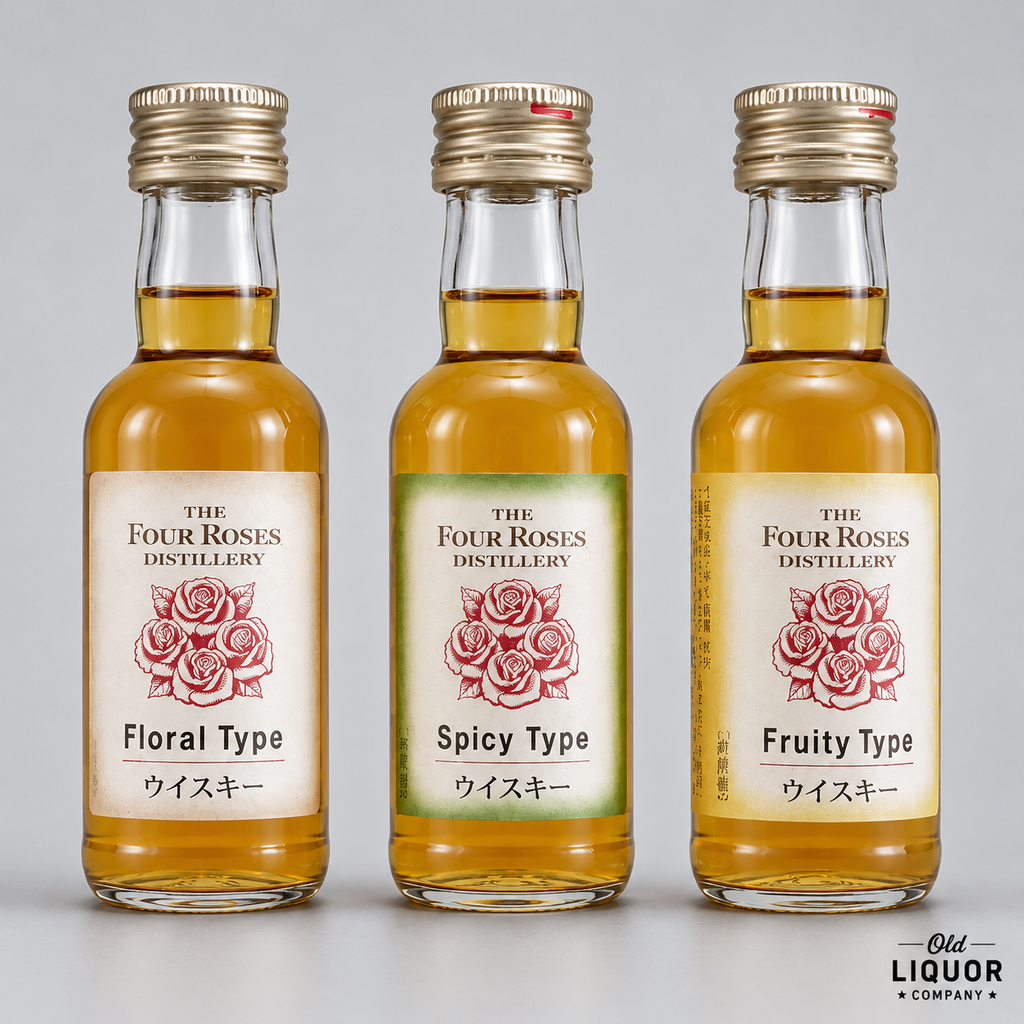
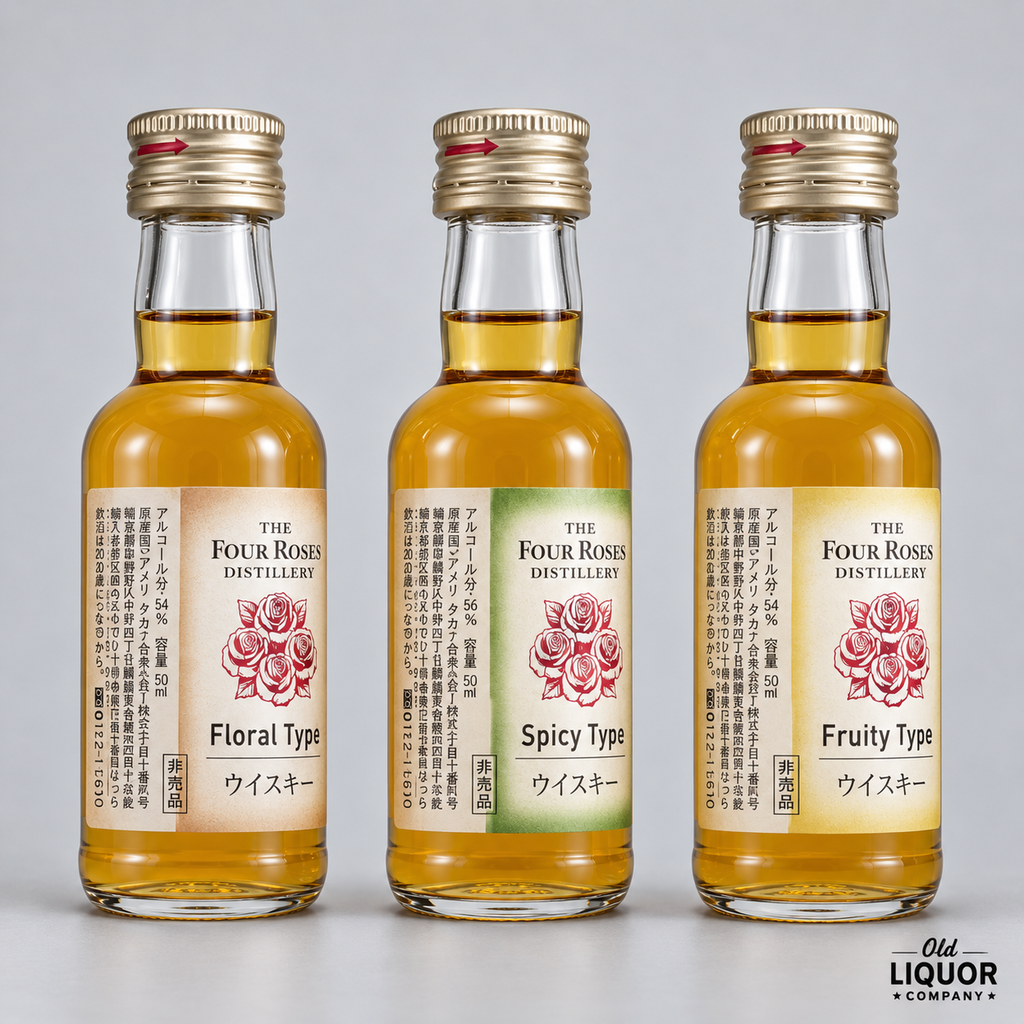
Four Roses has one of the most unique, dramatic, and romanticized histories in the American whiskey industry. Its story spans over 135 years, transforming from America’s top-selling bourbon into a banned domestic product, and finally undergoing a triumphant modern renaissance.
The history of Four Roses unfolds across four major eras:
1. The Romantic Origins (Late 19th Century)
The official founding date of the brand is recognized as 1888, when Paul Jones Jr. trademarked the Four Roses name in Atlanta, Georgia. A few years later, he moved his growing spirits business to Louisville, Kentucky, establishing a presence on its famous "Whiskey Row".
The name "Four Roses" is rooted in a charming piece of Southern folklore. According to company legend, Paul Jones Jr. fell deeply in love with a beautiful Southern belle. He sent her a marriage proposal, to which she replied that if her answer was "Yes," she would wear a corsage of roses to an upcoming grand ball. On the night of the ball, she arrived wearing a gown adorned with a corsage of four red roses. He named his bourbon after the gesture to symbolize his passion.
2. Surviving Prohibition (1920–1933)
In 1922, the Paul Jones Company made a strategic move by purchasing the Frankfort Distilling Company. This acquisition saved the brand.
When National Prohibition took effect in 1920, most distilleries were forced to close permanently. However, the Frankfort Distilling Company was one of only six companies granted a highly coveted federal license to package and sell whiskey for medicinal purposes. Throughout the 1920s, doctors regularly wrote prescriptions for Four Roses bourbon to treat various ailments, keeping the brand alive while competitors vanished.
3. The Seagram Era and Domestic "Exile" (1943–2001)
Following the repeal of Prohibition, Four Roses exploded in popularity, becoming the number-one selling straight bourbon in the United States during the 1930s and 1940s. This massive success caught the attention of Canadian spirits giant Seagram, which purchased the Frankfort Distilling Company in 1943.
Seagram made a highly controversial executive decision that altered the brand's trajectory for nearly 60 years:
- The Domestic Shift: Seagram chose to heavily push its own blended Canadian whiskies in the U.S. market. To eliminate internal competition, they completely pulled Four Roses Straight Bourbon off American shelves. In its place, they sold a cheap, blended American whiskey under the yellow Four Roses label that was cut with 66% grain-neutral spirits. American consumers rejected this inferior product, and the brand's reputation in the U.S. plummeted.
- The Export Gem: While Americans could only buy the cheap blend, Seagram continued to distill high-quality Kentucky Straight Bourbon at the Lawrenceburg distillery—but sent it entirely to export markets in Europe and Asia. In places like Japan, the premium version of Four Roses flourished and became a massive success.
4. The Rebirth and Unique Production Process
When Seagram dissolved in the early 2000s, the Japanese brewery Kirin Holdings purchased the brand and the historic Spanish Mission-style distillery in Lawrenceburg, Kentucky. Guided by legendary Master Distiller Jim Rutledge, Kirin immediately discontinued the cheap blended whiskey and reintroduced authentic Four Roses Kentucky Straight Bourbon back to the U.S. market in 2002.
What makes Four Roses unique in the modern era is its intricate distillation process, which relies on 10 distinct bourbon recipes. The distillery uses two separate mash bills (Mash Bill E: 20% rye, and Mash Bill B: 35% rye) combined with five proprietary yeast strains (V, K, O, Q, and F). By blending or isolating these 10 distinct spirit profiles, Four Roses creates highly consistent, award-winning small batch and single-barrel expressions that have fully restored the brand to its historical glory.
(Note: Reflecting its immense value, the brand returned to U.S. corporate ownership in early 2026 when it was acquired by the family-owned E. & J. Gallo Winery).