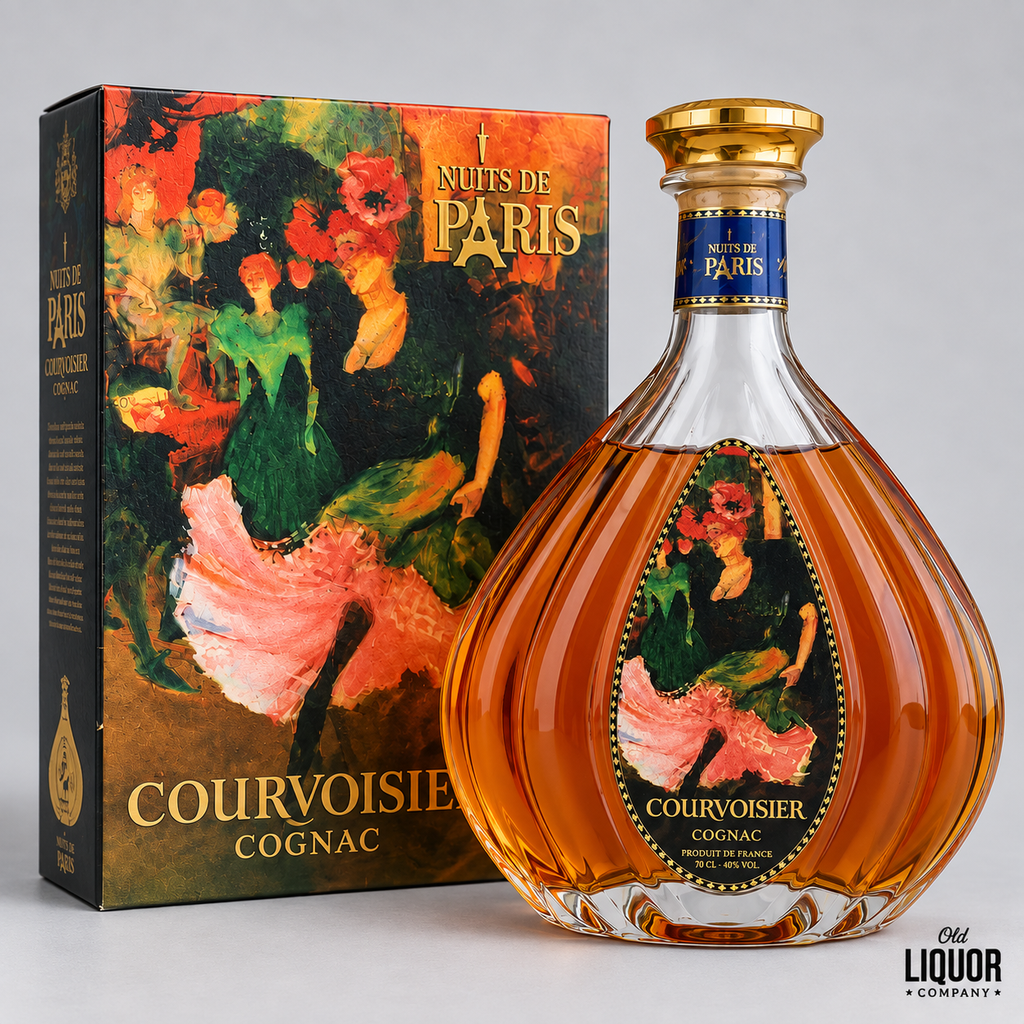
The history of Courvoisier is one of the most fascinating stories in the world of spirits, deeply intertwined with French royalty, global trade shifts, and modern pop culture. Today, it stands proud as one of the "Big Four" historical Cognac houses.
Here is the complete chronological history of this legendary house.
1. Parisian Beginnings (1809–1828)
Unlike many of its competitors who started in the countryside of the Charente, Courvoisier's story begins on the outskirts of Paris, in the bustling wine and spirit merchant district of Bercy.
- 1809: Emmanuel Courvoisier teamed up with Louis Gallois, the mayor of Bercy, to establish a wine and spirit merchant company.
- The Imperial Connection: Their cellars quickly caught the attention of Napoleon Bonaparte. The Emperor visited their warehouse in person and was so impressed by the quality of their distillates that he authorized them to supply his troops.
2. Relocating to the Heart of Cognac (1828)
To guarantee absolute quality and control over the distillation and aging process, the sons of the founders, Felix Courvoisier and Jules Gallois, decided to move closer to the source.
- 1828: The company officially relocated from Paris to Jarnac, a picturesque town situated directly on the Charente River. Here, they built the historic, waterfront Château Courvoisier, which remains the spiritual heart of the brand today.
- 1835: Felix shifted the company's core focus from trading to elite craft distillation, creating the signature house style.
3. "The Cognac of Napoleon" (1869)
The legend of Napoleon continued to define the brand. When Napoleon Bonaparte was exiled to the island of Saint Helena in 1815, he allegedly requested several casks of Courvoisier to be brought aboard the British ship HMS Northumberland. The British officers who tasted it affectionately dubbed it "The Cognac of Napoleon".
- 1869: Napoleon III (the nephew of the original emperor) made this relationship official. He granted Courvoisier the highly coveted title of "Fournisseur Officiel de la Cour Impériale" (Official Purveyor to the Imperial Court).
- The Silhouette: To this day, the distinctive shadow silhouette of Napoleon (L'Ombre de Napoléon) and the custom-designed bottles serve as a proud tribute to this royal heritage.
4. Innovation and the Belle Époque (20th Century)
In the early twentieth century, the house was acquired by the Anglo-French Simon family, who steered Courvoisier into a globally recognized luxury icon.
- 1889 & 1900: Courvoisier medaled at the historic Paris World Expositions, cementing its status as the high-end choice across elite European hotel bars and artist lounges during the Belle Époque.
- 1951: The house introduced the iconic Joséphine bottle. Named after Napoleon's first wife, this elegant decanter features a broad, heavy base and an exceptionally elongated neck, transforming how premium Cognac was packaged and marketed globally.
5. Modern Era and Urban Culture (21st Century to Present)
In the late twentieth and early twenty-first centuries, Courvoisier underwent a massive cultural evolution, expanding from traditional European gentlemens' clubs into the heart of American music and urban luxury.
- 2002: The American hip-hop artist Busta Rhymes (alongside P. Diddy) released the global smash hit single "Pass the Courvoisier, Part II". This pop-culture phenomenon triggered an unprecedented sales boom in the United States and introduced the historic brand to a completely new generation of spirit enthusiasts.
- Acquisition by Campari: After spending decades under major conglomerates (including Beam Suntory), the house entered its newest chapter when it was acquired by the Campari Group for $1.2 billion. Campari is currently positioning the historic brand with an intensified focus on its premium French heritage and artisanal blending mastery.