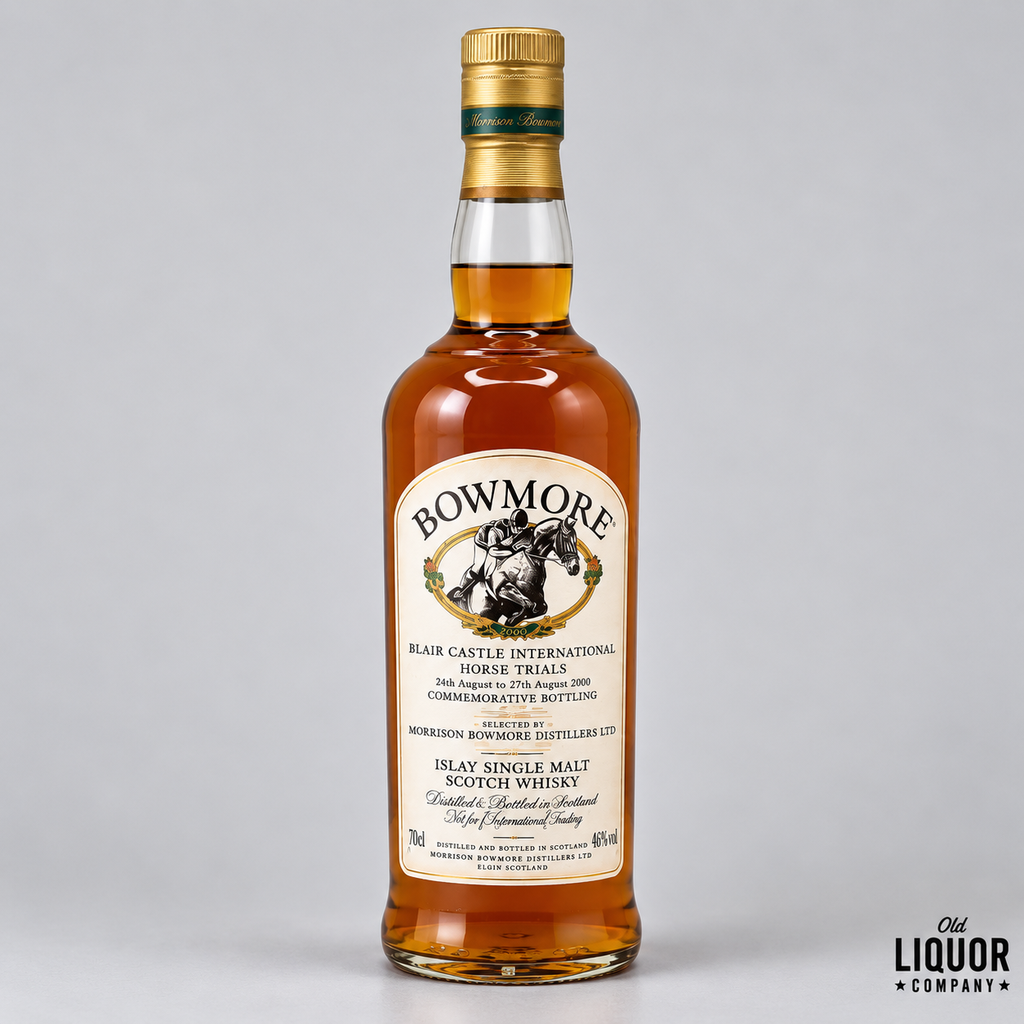
The history of Bowmore is one of the most romantic and enduring chronicles in the world of spirits. Officially recognized as the oldest distillery on the legendary island of Islay, Bowmore stands as a monumental pillar of Scotch heritage, celebrated for achieving a sublime balance between maritime peat smoke and an unparalleled explosion of exotic fruit.
🌊 1. The Foundations & The Legend of David Simpson (1779)
Bowmore was officially established in 1779 by a local merchant named David Simpson. This marks it as the oldest operating distillery on Islay and among the oldest surviving production sites in all of Scotland.
- The Island's Capital: Simpson built his distillery on the shores of Loch Indaal, right in the center of the town of Bowmore, which was constructed as a custom-designed administrative capital for the island.
- The Round Church: Overlooking the distillery sits the famous Kilarrow Parish Church, built in 1767. According to local lore, the church was purposefully constructed in a perfect circle so that the Devil would have no corners to hide in. Islay locals joke that when the Devil found himself chased out of the church, he ran down the hill and hid inside the distillery's wash stills.
🏰 2. Morrison’s Golden Era & The Legendary "No. 1 Vaults" (1963)
After changing hands several times through the 19th and early 20th centuries, Bowmore was purchased in 1963 by Stanley P. Morrison, establishing Morrison Bowmore Distillers. This buyout triggered the absolute golden age of the distillery.
- The Sea-Level Vaults: The crown jewel of the distillery is its ancient maturation warehouse, the No. 1 Vaults. It is the only dunnage warehouse in Scotland that sits entirely below sea level. Its thick, stone walls are constantly battered by the cold waves of Loch Indaal. The intense humidity, salty sea air, and cool, unmoving temperatures create a uniquely slow maturation window that yields an unmatched maritime, coastal profile.
- The Magical 1960s: Under Morrison's guidance, the distillery was modernized with a steam-heating system in 1963. The spirit distilled during this immediate post-modernization window is considered by global experts to be the finest liquid ever produced in Scotland, resulting in legendary releases like the mythical Black Bowmore (1964) and rare 1950s remnants like the 1958 Intertrade.
🥭 3. The Bowmore Alchemy: Tropical Fruit vs. Mild Peat
Bowmore possesses an ancestral flavor profile that differs drastically from its heavy, medicinal southern neighbors like Laphroaig or Ardbeg.
- Hand-Turned Malts: Bowmore still malts roughly 25% to 30% of its own barley on traditional floor maltings. The peat is harvested by hand from the nearby Laggan Moss fields, which are rich in roots, heather, and ancient sea moss, lending a softer, far more aromatic sweet smoke.
- The Tropical Phenomenon: Old-school Bowmore expressions—most notably those distilled between the 1950s and mid-1970s—are globally revered for a phenomenal chemical reaction that occurred during incredibly long, slow fermentations and low-temperature distillations. This resulted in a historic explosion of intense tropical fruit flavors (mango, passievrucht, papaya, and pink grapefruit) elegantly married to a waxy, coastal peat smoke.
🤝 4. Japanese Precision & Global Rebrand (1994–Present)
In 1994, Japanese beverage giant Suntory fully acquired Morrison Bowmore (which subsequently became Beam Suntory and was renamed Luntory Global Spirits).
- Exquisite Wood Selection: The Japanese influence brought unmatched precision to Bowmore’s wood management. The distillery was granted direct access to the world's finest first-fill Oloroso and Pedro Ximénez sherry casks from Spain, alongside ultra-rare Mizunara oak casks from Japan.
- Luxury Renaissance: In recent years, Bowmore has evolved from a traditional Islay malt into an elite, ultra-luxury lifestyle icon. This is highlighted by multi-million-pound limited releases and an exclusive design partnership with the prestigious British luxury automotive house, Aston Martin.
👑 5. Present-Day Collectible Standing
Today, Bowmore stands firmly at the absolute apex of the secondary whisky market and global auction houses. While its core commercial age-statement releases (such as the 12, 15, and 18-year-old) remain highly accessible staples for enthusiasts, its rare 20th-century archive bottlings have transformed into museum-grade, blue-chip alternative investment assets prized by elite sovereign portfolios and institutional wealth curators.