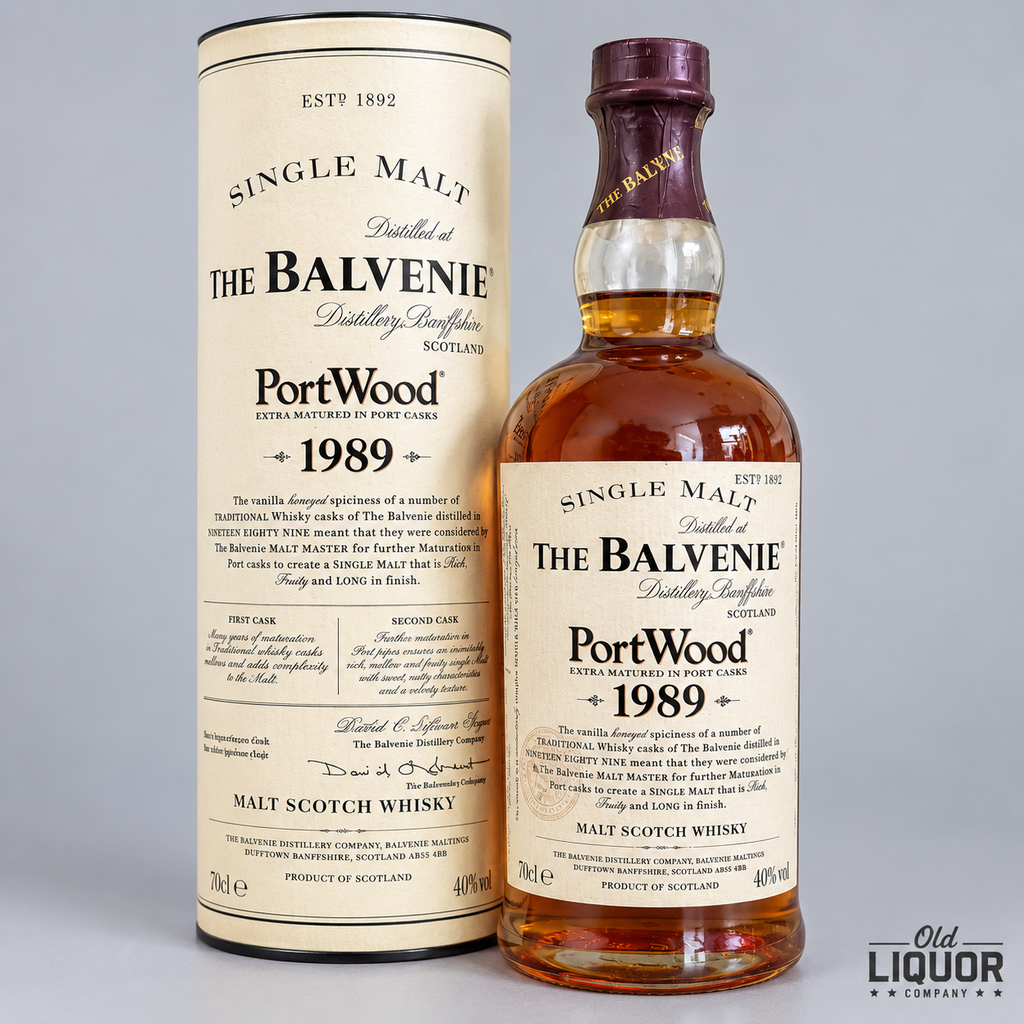
The history of The Balvenie is one of the most remarkable and deeply respected stories in the Scotch whisky industry. Located in Dufftown, Banffshire, Scotland, it stands out as one of the very few distilleries that has remained independently owned by the same founding family—William Grant & Sons—since its inception in 1892.
What truly sets The Balvenie apart globally is its fierce dedication to The Five Rare Crafts, making it the only distillery left in Scotland that still maintains total hands-on, traditional control over every stage of production on a single site.
🏰 1. William Grant and the Foundations (1892–1893)
After successfully establishing his first distillery, Glenfiddich, in 1887, legendary pioneer William Grantdecided to build a second distillery on an adjacent piece of land.
- The Historic Site: He bought the property from the nearby, ruined Balvenie Castle and converted a local mansion, Balvenie New House, into the distillery's main malting rooms and offices.
- First Spirit Flow: On May 1, 1893, the first spirit trickled out of the stills. For the first eight decades of its life, the single malt produced here was kept secret from the public, working almost exclusively as a high-quality backbone blend component for Grant’s Standfast blended Scotch.
🌾 2. Preserving The Five Rare Crafts
While the mid-20th century saw the vast majority of Scottish distilleries systematically automate, modernize, and outsource their labor to save money, The Balvenie explicitly refused. They continue to sustain five traditional, human-led techniques:
- Home-Grown Barley: They still farm and cultivate a dedicated portion of their own barley on a 1,000-acre estate (The Balvenie Mains) directly next to the distillery buildings.
- Traditional Malt Floors: They operate one of the last remaining active floor maltings in Scotland. The steeped barley is laid out across concrete floors and manually turned over with large wooden shovels by teams working shifts.
- An On-Site Coppersmith: The distillery employs its own dedicated, permanent coppersmith to hand-forge, polish, and maintain their unique, bulging stills, colloquially known as "The Balvenie Ball."
- A Dedicated Cooperage: They maintain a full, on-site team of traditional coopers who build, heavily repair, and direct charcoal-char (toasting) every single oak cask used for aging.
- The Malt Master: Every batch is overseen and evaluated by an expert nose to guide multi-decade maturation.
🧪 3. David C. Stewart and the Invention of "Wood Finishing" (1962–1983)
The architect of modern-day Balvenie is David C. Stewart MBE. He joined the firm in 1962 and was officially named the distillery's fifth Malt Master in 1974.
- The Landmark Experiment: In 1983, Stewart conducted a revolutionary experiment that would forever alter the entire whisky world. He took single malt that had already matured for over a decade in traditional American oak Bourbon casks and transferred it into fresh, active European oak Oloroso sherry casks for a brief final maturation.
- A New Industry Standard: This technique, commercialized in 1993 with the launch of the world-famous The Balvenie DoubleWood 12 Year Old, pioneered the modern concept of "Cask Finishing" (or Wood Finishing). Today, almost every distillery in Scotland and beyond uses David Stewart's exact method.
🍾 4. The Emergence of the Single Malt (1970s–1990s)
The Balvenie was officially bottled and launched as a standalone Single Malt brand for the first time in 1971, featuring a dark label on a tall bottle.
- The Cognac-Style Era: Throughout the 1980s and 1990s, the flagship expressions—including the highly coveted Founder's Reserve 10 Year Old—were famously housed in a striking, bulbous, cognac-flagon-style bottle with a long neck and gold script typography.
- The Modern Rebrand: In 1993, coinciding with the official release of the DoubleWood, the distillery changed its global profile to the shorter, thicker-necked bottle shape seen on shelves today.
👑 5. Six Decades of Legacy
David C. Stewart served the distillery for an unparalleled 60 years, making him the longest-serving Malt Master in Scotch history. Today, he has transitioned into an advisory role, passing the torch to his hand-selected successor, Kelsey McKechnie. Together, they ensure that the iconic, exceptionally rich, honeyed, and complex character of The Balvenie remains beautifully preserved for generations to come.