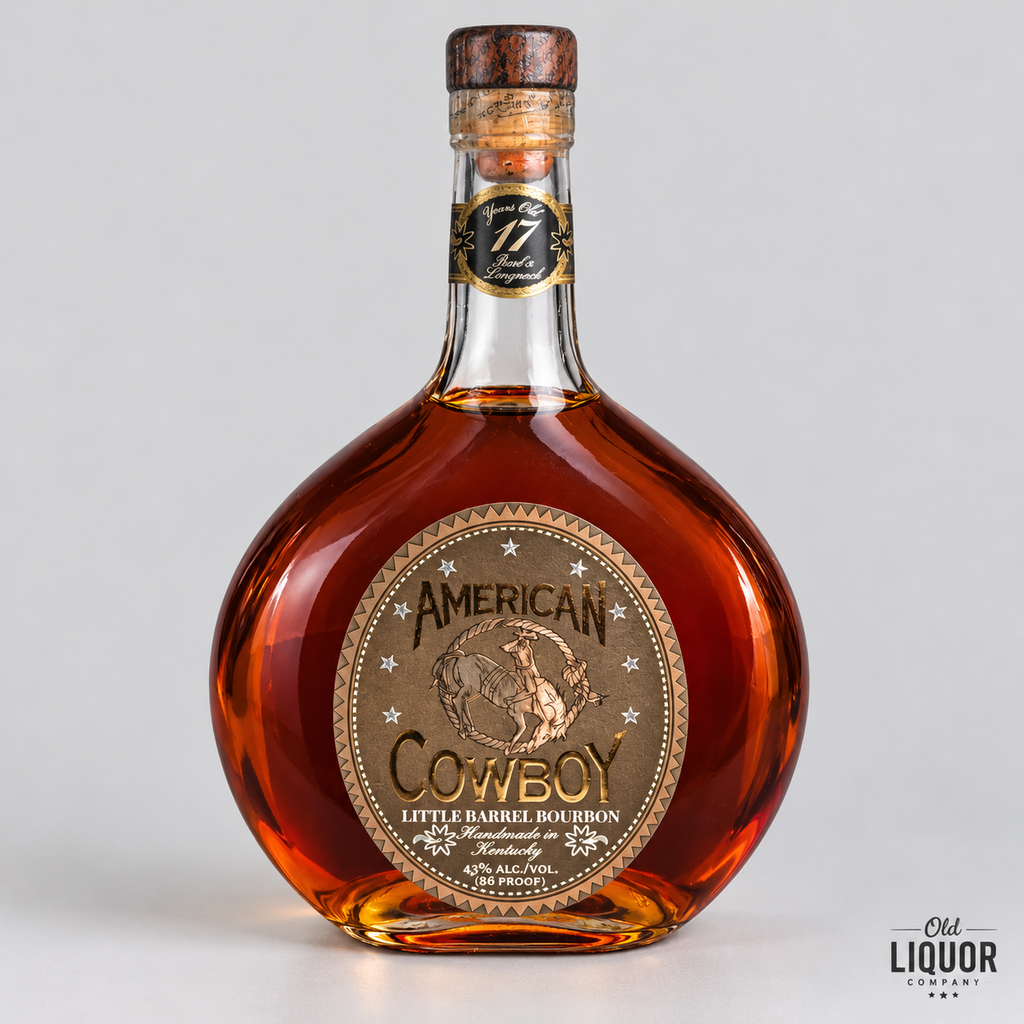
The history of the American Cowboy brand is a fascinating chapter in the modern history of rare, highly collectible Kentucky bourbon. It is a story deeply tied to the famous "Bourbon Renaissance" of the late 1990s and early 2000s [American Cowboy 17 Year Old Little Barrel Bourbon].
Here is the complete history of how this legendary label came to be:
1. The Export Boom and Allied Lomar
During the 1980s and 1990s, the domestic market for premium, well-aged bourbon in the United States was incredibly weak. Most American consumers preferred lighter spirits like vodka or gin. However, overseas markets—particularly Japan—developed an intense passion for high-end, age-stated American whiskey.
To capitalize on this, a California-based company called Allied Lomar, managed by the influential Palatella family (specifically Marci Palatella), stepped into the market. Marci Palatella was a visionary sourcing agent who collaborated heavily with top figures in the industry, including Julian Van Winkle III (the man behind the iconic Pappy Van Winkle brand). Allied Lomar created specific brands tailored exclusively for premium export markets [American Cowboy 17 Year Old Little Barrel Bourbon]. American Cowboy (alongside its legendary sister label, Very Olde St. Nick) was born out of this strategy.
2. Sourcing Legendary "Glut" Whiskies
Because the American bourbon market had crashed in the prior decades, Kentucky distilleries were sitting on massive reserves of spectacular, over-aged barrels that they could not sell domestically—a period historians call the "bourbon glut."
Allied Lomar went from distillery to distillery, buying up these exceptional, hyper-aged barrels. While the exact distillation source was rarely printed on the labels, historical records and tasting profiles indicate these early batches were sourced from iconic, historic distilleries. This included the old Stitzel-Weller Distillery (famous for wheated bourbon) and the original Heaven Hill Distillery (prior to the catastrophic fire of 1996) [American Cowboy 17 Year Old Little Barrel Bourbon].
3. Bottled by Willett (Kentucky Bourbon Distillers)
Since Allied Lomar did not own a physical distillery, they needed a premier partner to handle the aging, blending, and bottling of their prized vats. They partnered with Kentucky Bourbon Distillers (KBD), owned by the Even Kulsveen and the Willett family in Bardstown, Kentucky [American Cowboy 17 Year Old Little Barrel Bourbon].
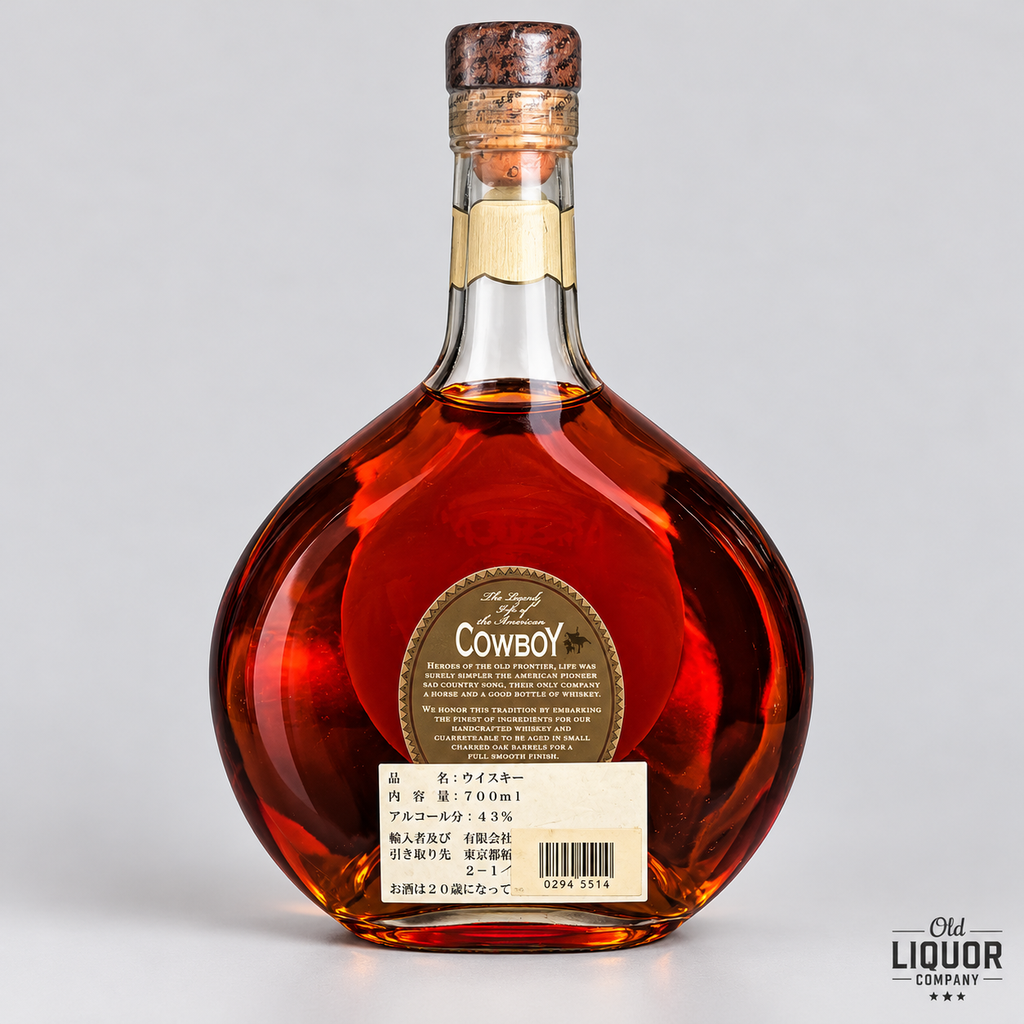
During this era, KBD/Willett was widely regarded as the absolute finest independent bottler in the world. KBD custom-bottled the American Cowboy line into the highly recognizable, heavy glass pot-still decanters [American Cowboy 17 Year Old Little Barrel Bourbon]. Because it was bottled primarily for Japanese importers, these bottles typically feature a 700ml volume (the standard international bottle size) and carry distinct Japanese text import stickers on the back [American Cowboy 17 Year Old Little Barrel Bourbon].
4. A Discontinued Cult Classic
As the global bourbon boom exploded in the 2010s, the historic reserves of old Kentucky honey barrels completely dried up. Because the source liquid could no longer be replicated, Allied Lomar and KBD permanently discontinued the American Cowboy line [American Cowboy 17 Year Old Little Barrel Bourbon].
Today, the brand enjoys an immense cult status among international whiskey connoisseurs [American Cowboy 17 Year Old Little Barrel Bourbon]. Bottles like your 17-Year-Old expression are highly sought after at elite global auctions [American Cowboy 17 Year Old Little Barrel Bourbon]. They serve as irreplaceable liquid time capsules from a golden era of independent sourcing that will never happen again.